Monday, October 13, 2008

The General Unfairness of Things

Overheard on the WYEP's "Discumentary" show: "The album... went on to sell a modest 60,000 copies."
Now if that had been a book, it would be a bestseller, or at least well on the way. Print runs of 2500-3000 copies were common for literary fiction last I checked and usually not all of those copies sell.

Labels: ,

Monday, September 29, 2008

Weekend Entertainments

I did not manage to get myself out dancing more than twice over the weekend (one has to ease back into vigorous activity, evidently), but I did initiate two other grad students into the mysteries of West Coast Swing. They both enjoyed themselves and both had reason to agree, as one of them remarked several times, that people in Pittsburgh are "really friendly." I was definitely impressed with the way so many people went out of their way to welcome my friends and help them learn the steps. People have been nice to me, too, but as I'm less of a complete beginner, it wasn't quite as striking.
I spent the rest of the weekend working on my Czech Modernism syllabus and an article on gender and the body in First Republic Czechoslovakia (due in a couple of weeks), and finishing the first draft of a large and entirely unacademic project that has been entertaining me for the past few months.
And, I might add, I finished reading Aldous Huxley's impertinent 1920s classic, Antic Hay. I had no idea when I began it that it would be so full of art and architectural discussion, or so full of entertaining quotable lines. Surely I must be able to find a way to quote one of the lines about how one can no longer dream in 1922 (because it suggests Freud) into my dissertation. And then (My Sibling will appreciate this) there's the line where one character asserts that "Most women are like dachshunds." I am feeling reluctant to return the book on the grounds that I need to extract all the most amusing quotes for future use. I tried to find out when this tale appeared in Czech, but the NKP server seems to be down just now. The British were going into shock over it in 1923 and I assume it was widely translated. (Well, Worldcat reminds me that it's often hard to know just how a book's title is translated, although I can tell that Point Counterpoint, Brave New World, and Doors of Perception have appeared in Czech.)

Labels: , , , , ,

Saturday, February 16, 2008

Goethe as Light Reading

I thought I should take a look at Goethe's Elective Affinities, since Toyen did title a painting after it, but after going through a bit of it I decided that the basic idea was clear to me and reading the book itself fell more into the category of something that could be read on the bus (on those occasions when fellow passengers are not too distracting, which some of them can really be to the point where you wonder why the bus driver isn't wearing earplugs).
John tells me he is currently using Werther for much the same purpose, although he is much better than I am at always having something to read on the bus.
We aren't sure what Goethe would have thought of this use of his works, however.
Or what Goethe would have thought of Toyen's painting.

Labels: , ,

Friday, December 30, 2005

Books for Sale!

In general, it is not my purpose in this blog to sell anything (in fact, my grant prohibits my engaging in money-making activities), but it occurs to me that a few readers might be interested in a volume currently available on Half.com.
My friend and former tutor Štěpanka Korytová-Magstadt is not just one of the human companions of the inimitable Vegetka (see earlier), but is the author of a well-regarded text on Czech immigration to the Midwest, To Reap a Bountiful Harvest. If you have Czech ancestry, or are interested in immigrant/migration studies, you will want to own this book. We are selling brand-new copies of the paperback edition for $14.95 plus shipping. The full $14.95 goes to Štěpanka.

Filed under:

Labels: , ,

Tuesday, December 27, 2005

Vy and Ty, atd.

Ever wondered about Vy and Ty, or Vous and Tu, or Sie and Du? If you really get linguistic, perhaps you even wonder about the archaic English form Thou. If your curiosity on this issue troubles you at night, read this book review or even the book itself. Quite a few European languages are covered, including Czech and Finnish. I must say I was surprised to learn that polite usage has been historically very unstable in many European languages over the past thousand years or so. Then again, I am always uncertain when to use Vy and Ty. In theory, one uses Vy for multiple people or to be respectful, but generally when I try to use Vy, I get Ty in response. I think this means that people do not regard me as an elderly person of high organizational rank.
The book itself (which I haven't read) is:
Taavitsainen, Irma and Andreas H Jucker, eds. (2003) Diachronic Perspectives on Address Term Systems, John Benjamins Publishing
Company, Pragmatics and Beyond New Series 107
The review is by Margaret Sonmez.

Filed under:

Labels: , ,

Wednesday, December 21, 2005

Bringing Up Girls in Bohemia

“That was typical: if I had stood in the door and asked her about Toyen or Sartre or the history of Christianity, she wouldn’t have batted an eyelid. I ask her about a lamp—and she almost bursts a blood vessel.”
--Michal Viewegh, Bringing Up Girls in Bohemia

The other night I finally finished reading that rather short novel, Bringing Up Girls in Bohemia. I had first heard of it back in August 2004 (which I realize I can no longer refer to as “last summer”) when our intensive Czech course featured an afternoon chat with its author. While I felt it was pretty much impossible to say anything very intelligent to an author whose work I had only just learned of and certainly not read, and therefore said little or nothing in either Czech or English all afternoon, I had to admit that Viewegh did a good job of carrying off an entire afternoon of Being An Author, and in fact managed it nearly all in English since most of the students were not advanced enough to follow it had it been in Czech. (I was in the advanced class, but as its least advanced member.) Since he admitted that, like the narrator in Bringing Up Girls in Bohemia, he had formerly been a teacher, I daresay he learned some of his speaking and audience-entertaining skills there.
In any case, he talked about his various novels and about being an author who is considered neither truly literary nor quite on the level of the tabloid Blesk. I supposed at the time that he meant he was what we call in the US a mid-list author, but this was not really it, because mid-list authors fall into publishing limbo and can be of all descriptions except for best-selling or utter dreck. Viewegh sells pretty well in the Czech Republic and has been translated into other languages.
Consequently, when I ran across an English edition of his novel, I went ahead and bought it. After all, it looked amusing. It was described as a “picaresque romp” about post-Revolution Prague. True, I already had Jesse’s copy of White Teeth on hand for entertainment, but that is set in London.
Now that I have finished Bringing Up Girls in Bohemia, I confess to mixed feelings. There are things I like about it, and which made me laugh. At the same time, it is not a book that I really found especially satisfying. I do not always require novels to be very literary—I am capable of enjoying decidedly nonliterary mysteries, although they do have to be good examples of their genre. (On the other hand, I was reading Nabokov’s Ada not long ago and have only a few pages left, due to accidentally leaving the book in Brno. It held my interest pretty well most of the time.)
The story line of Bringing Up Girls in Bohemia was not a problem. While in general I feel that real-life student-teacher romances are unwise (after all, look what happened to Abelard), I am perfectly happy to read about them in fiction, whether the ending is happy or tragic. Likewise, I am always up for fiction that explores the peculiarities of Czech history, culture, and daily life.
Indeed, the novel has lots of entertaining scenes, mainly set at the school where the narrator teaches. The descriptions of students, teachers, and administrators are pretty funny. I also appreciated the fact that part of the comedy about the school was that it was named after the writer Vladislav Vančura (an associate of Toyen; in fact, after he was executed by the Nazis, she did the set design for his play Teacher and Pupil) and that there were occasional humorous references to the literary archive where I spend so much of my time.
But alas, something about the novel never really came off for me. Perhaps it was that the character of Beata never really came to life. Initially she was interesting purely because she was depressed and sullen, but once she emerged from that stage and fell for the narrator, she failed to seem at all interesting. I knew that she would eventually commit suicide, but this never managed to become real or sad to me. In other words, the comic bits worked to some extent, but the serious aspect failed. I had enough trouble believing that the narrator ever had an affair with her, let alone mourned her death. Furthermore, the little quotations and italicized phrases, which were initially rather striking, got old quickly.
One never knows, I must admit, whether to blame the author or the translator. The book seemed to have so much potential, but I could not say it really fulfilled it.
We will just have to hope that Michal Viewegh will not have the same reaction to any of my novels when they are (published and) translated into Czech.

Filed under:

Labels: ,

Thursday, December 15, 2005

Return to Hovořime s hostem

Your correspondent has opened up shop as a species of hotel again and will need recourse to that fine guide, Hovořime s hostem (See earlier post). Specifically, the Fulbright holiday gathering is on Friday and because my phone connection is better than Jesse’s, he has arrived in Prague early in order to take part in a nonprofit board meeting in Chicago.
This has its comic aspect, although of course nonprofit board meetings are not by definition humorous.
First off, it is our experience that friends in the US have a hard time grasping that there is a significant time difference between there and here. Thus, surely it can be no inconvenience to us that a board meeting begins at nine—no, actually ten—at night Prague time! (If it began at, say 5:00pm, Jesse would have been able to accomplish the whole thing in Brno at his tutor’s, but she does not stay up as late as I do.) Thus, we had to amuse ourselves between supper and the onset of the meeting, as installing my modem software onto his computer and testing Skype did not take as long as it initially seemed it might. (That is, once I located the software.)
Consequently, we have now compiled a large selection of dissertations on Czech topics that I had acquired, and have put them on a CD. This led to that perennial topic (no, not prams), the Pragocentrism of American researchers. Well, I can’t help it that Toyen lived in Prague rather than in Brno or Ostrava. (I received a personal exemption but had to point out that I do read the papers of people like Artuš Černík, a Brno inhabitant.)
The dissertations did not quite fill the entire CD so we then picked out a nice selection of Czech art to add to round it out. There was a time when it seemed that Toyen was too startling for Jesse’s taste, but he has become acclimated. I was even able to interest him in Štyrský’s collages of the Holy Family and all of the collages in Emilie příchází ke mně ve snu. Leaving the Czechs, Max Ernst’s Strength through Sport also went down well. I don’t know what will happen if he accidentally shows these in the course of a lecture on Moravian folk performance. It will certainly give the audience a different impression of what could be considered folkloric. (Well, I don’t have very much folkloric art on my laptop yet. It isn’t as though I don’t like it.)
So, here we have the board meeting via that vital textbook Hovořime s hostem.
As host here, I could initially say “I don’t understand English, I’ll call my colleague.” It doesn’t matter that I don’t have a colleague, I can go away and come back in the guise of one.
Jesse could then remark “We’ve come to Prague again,” and “We always liked it here.” As far as I know there is only one of him, but you never know. He could have a Dr. Jekyll-Mr. Hyde personality. After all, he looks very inoffensive but he does like my sibling’s new web site.
I can then say “Are you expecting somebody?” and “Please speak more slowly for me to understand you better.”
If Jesse says “I’d like a double room with bath for three nights,” I will have to point out that the choice of places to sleep has not changed since his last visit. If he then tells me “I booked two rooms in the name of Mr. M. over the phone,” I will say I thought he was someone else. It ought, however, to be enough to say “I can offer you one of our best rooms.”
If Jesse is a trifle confused, he might say “I want to put a call through to Brno.” (It’s true that the meeting is in Chicago, but his mind is usually on Brno.)
I could say “The telephone is next to the porter’s lodge.”
If I feel a bit testy at hosting a conference call in my living room, I can say “Sorry, this table is reserved.” After all, it was being used for gift-wrapping and general debris. On the other hand, I might feel honored that my phone connection is so strong, whereupon I could say “I hope you’ll enjoy the stay.”
I could also say “As soon as I get connection, I’ll put the call through to your room.”
Jesse might then have to respond that “They haven’t answered.”
I could then say “Excuse me, you’re wanted on the phone.” This could be varied with “The line is engaged. Wait a moment please,” if I feel mischievous. I could add “Here is the telephone directory, sir (madam)” and “For calls outside the hotel dial number two first.”
Before long, I suppose I should say, sternly, “The members of the group are waiting for you.”
Since the meeting will last for hours, it will be better if I point out that “The lavatory is next to the cloakroom.” Likewise, if I feel very hospitable, I can inquire “What can I bring you?” If the meeting goes on longer than anticipated, I might need to ask “What would you like for breakfast (lunch, supper)?” Or “Anything else you wish?”
If anyone else shows up at my door, we can point out that “The meeting of the Koospol corporation is taking place on the groundfloor further back. (Never mind that the nonprofit upon whose board Jesse sits cannot properly be called a corporation, or that my apartment is not on the ground floor.)
The various members of the board can open by saying “We hope you’ll have fine weather.”
Jesse may at some point turn to me and remark “We can’t make up our minds. Could you give us advice?”
If Jesse has been silent long enough to appear comatose, I can inquire “Is everything all right?”
Indeed, if the interest value of the meeting flags, Jesse may need to say (away from the microphone) “Can you bring me English newspapers?”
After a time, I might say “Here’s a glass of water and a head-ache pill.”
If Jesse feels that the meeting has gone on far too long, he could try telling the other board members “Tonight there’s a performance of a cymbal group.” If they are perceptive, they will grasp that the lure of the cimbalom group is stronger than that of the nonprofit board meeting.
I can then say, “Have you been satisfied?” and “Thank you for your visit. We hope to see you again.”
Of course, I can finish by stating “This is the charge for the trunk-call.”
(Note: Jesse was re-elected during the meeting. That must mean it went well.)


Labels: , ,

Tuesday, December 13, 2005

A Member of the Working Class


Not long ago I noted that you can still buy my friend Milt's Spanish Civil War novel Another Hill.
Another of his friends has helped him get out the prequel (I hate this word, but is there a better term?), A Member of the Working Class, which I also edited (although perhaps not in as final a way). Here's the information on how to get copies of both books.

Member of the Working Class, book one of Milton Wolff's three-book autobiographical series, is now available at www.iuniverse.com
Go to the "Bookstore" section of the website and type in the the title in the "Browse" section. (Or here.) (It's also available at Barnes and Noble.com)
Book two, Another Hill, remains available from the University of Illinois Press. It has just been translated into Spanish and published in Barcelona by Ediciones Barataria (www.barataria-ediciones.com)
Enjoy!
------------------

Member of the Working Class
by Milton Wolff

iUniverse price: $19.95
Format: Paperback
Size : 6 x 9
Pages: 256
ISBN: 0-595-37267-8
Published: Nov-2005

International orders:
Call 00-1-402-323-7800

The autobiography Member of the Working Class provides a rich, unusually detailed portrait of the early working-class life of Milton Wolff during the 1920s and 1930s.

Book Description
At the age of twenty-two, author Milton Wolff became the last commander of the Abraham Lincoln Battalion, the volunteer unit that fought against fascism during the Spanish Civil War (1936–1939). Member of the Working Class is Wolff's story, from his childhood up until he prepares to depart for Spain. Throughout Wolff's story, rich, curious details emerge about working-class life in the 1920s and 1930s. This blunt account of a rough, unadorned American life helps us find clues to Wolff's future persona. How did the man who Ernest Hemingway called "as brave and good a soldier as any that commanded battalions at Gettysburg" become the natural leader of the volunteers who went to Spain to fight fascism?


Praise for Another Hill: An Autobiographical Novel, also by Milton Wolf:

"Gritty realism and an eye for political complexity... the muscular narrative provides valuable testimony of what it was like to fight Spain's rebel Nationalist troops while the Western democracies passively looked on."
—Publishers Weekly

"...a gripping account of the bravery of nonmilitary men fighting for a just cause."
—Kirkus Reviews

"Engrossing: [Wolff] has an eye for significant detail and a gift for dialogue."
—Bernard Knox, New York Times Book Review

(You can read the reviews in greater detail here but it's no longer possible to order books through my site.)

Filed under:

Labels:

Thursday, December 01, 2005

Unblokt

Just for fun, all of you writers with vaguely surrealist or just playful tendencies can experience a new form of Exquisite Corpse by adding sentences to the collaborative novel at Unblokt. You think up a sentence to fit between the two that are shown.

Labels:

Wednesday, November 23, 2005

Random (or not so random) News

John tells me that he photocopied several hundred pages of archival material on his recent trip to Seattle, and that he’s very glad he went to the American Musicological Society meeting, where he heard some interesting talks and met quite a few people. He will not make it to Prague for Christmas, though.
My friend Milt Wolff recently celebrated his ninetieth birthday and then (as far as I know) went off to revisit Spain, which he does every so often. His autobiographical novel Another Hill, which I edited, is still available from University of Illinois Press.
Diane and Greg have reinstated comments on their blog now that it’s possible to avoid comment spam, so if you read something interesting there you can actually respond. Diane covers a wide variety of intriguing music (see link to right).
Phoenix the rabbit, victim of a brutal attack by an obviously seriously disturbed teenager in Northern California, has had a gruesome but not surprising new health complication but is otherwise recovering with astounding speed at the San Francisco/Marin County House Rabbit Society. To read more about him, and/or donate toward his and other rescued rabbits’ care, please visit the SF/Marin HRS web site at www.saveabunny.com. The case will be heard in the Solano County Juvenile Court, with the Deputy District Attorney seeking felony charges of animal abuse and torture. Phoenix will not, for obvious reasons, be available for adoption for some time, but many other Bay Area rabbits are in desperate need of homes due to animal shelter overcrowding, so if you can adopt or foster a rabbit there, contact sara@rabbit.org. His majesty king George was adopted from the House Rabbit Society quite a few years ago (Ms. Spots came to us via the Humane Society in Pittsburgh).

Labels: , , , ,

Friday, November 18, 2005

We Speak with Guests

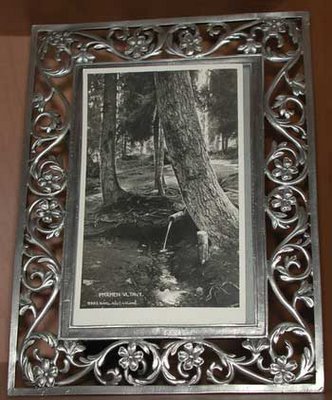
On a visit to an antikvariat some weeks back, Jesse and I encountered a remarkable item that begged to be read aloud from and which I decided needed to be purchased. (I also bought an elderly postcard that shows the source of the Vltava as being a sort of drain spout appearing, in surrealist fashion, in the middle of a forest.)
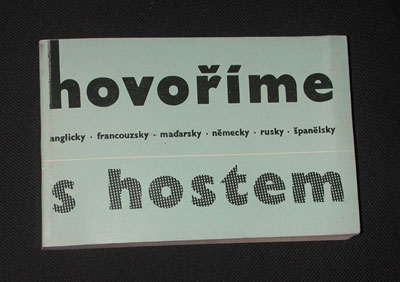
Hovoříme s hostem is a small but thick book that gives English, French, Hungarian, German, Russian, and Spanish translations of various handy phrases. For example, with its aid I can tell my guests the likes of:
“Will you please have a look at our wine-list” or “Help yourself to the cutlery at the end of the serving line.”
I can also announce, “Excuse me, smoking is prohibited in here” and “No meat is served today.” After all, it’s important to let my guests know where I draw the line.
If guests want to borrow my phone, I can sternly say “You’ll get telephone tokens in the cloakroom.”
If I wish to draw their attention to the periodicals in the basket (see earlier post about Cosmopolitan) I can inquire “What magazines or newspapers can I bring you?” After all, I am sure that someone will want to read my old copies of Ateliér, and of course everyone who visits wants to see what Cosmo recommends to “Turn Him On Like Crazy.”

If I am feeling a little rushed and overwhelmed at the outset, I can say “Excuse me I’ll first set the table a bit.”
In certain circumstances, I might be obliged to tell a guest “A gentleman [lady] was asking for you. He [She] will call again at six.” This will be especially useful if I’m unsure of the gender of the caller, for instance if s/he provides evidence of hermaphroditism. (It’s always possible that one of my soirees might begin to resemble something out of Djuna Barnes’ Nightwood, although this has not happened thus far.)
If guests begin to seem restless, I can say “I recommend you to stay for a while, there’ll be some music.” Or, if their fidgeting appears to relate to an addiction of some kind, I can state “Here are the cigarettes and matches.” After all, there is a pack of ancient cigarettes out on the balcony that may as well get used up.
If the guests are very energetic, I can assure them that “There’ll be dance music from nine till two a.m.” After that point, when I may be starting to feel a trifle weary, I can inquire “Up to what time does dancing go on?” and, if they show no signs of ceasing their exertions, I can let them know that “You can switch to the club where they close as late as four a.m.”
Musically speaking, Jesse and I were interested to note that the translations in Hovoříme s hostem are not always entirely accurate. “Dnes večer vystupuje cimbálový soubor” is rendered into English as “Tonight there’s a performance of a cymbal group.” We are a little nervous at the thought of a group of crazed percussionists taking the place of the cimbalom band. I don’t think that “un ensemble de cymbaliers” is probably correct either, although I expect the Hungarians will be safe with their “cimbalmos-együttes.” (At least, I know that the együttes part can’t be too far wrong, as it is one of the only words I know in Hungarian.)
Once the guests have dealt with the cymbal or cimbalom group (presumably it would be in my living room), I can tell them “That’s the well-known singer K.” I’d like to know whether the English translation uses the form “K” as a tribute to Kafka, as the Czech, Hungarian, German, Russian, and Spanish refer to “Krosnová” (not a singer I have heard of). The French apparently require greater detail, as they are told she is “Irène.” Why she will be crashing my party is another matter entirely.
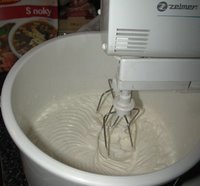
As things wind down, I can say “We serve six special kinds of coffee” and “I can recommend you this fruit gateau.” Being an obliging hostess, I can add “Of course you can have whipped cream,” as I have the use of a high-tech mixer that has already aroused great interest among my guests. Furthermore (perhaps a little late in the game), I can state “Sorry, drivers mustn’t be served alcoholic drinks.”
If it seems to me that financial remuneration would be desirable for my services, I will be able to tell guests “I’ll have your bill made out.” If I wish to be picky (or they are waving 1000Kč notes at me), I can ask “Have you got small change please?” If I wish to be really, really picky, I can demand to know “How many crescents or rolls did you have?” It may, however, be necessary in some cases to state “I’m afraid we can’t exchange your money” (if they attempt to pay in Monopoly bills or Transnistrian currency).

Likewise, if I wish to make it clear that I am not too inebriated to have noticed that they are total strangers who wandered in off the street, I can say “I didn’t catch your name. Would you write it down for me please.” If they balk, I can say “Will you please show me your passport.” (You never know when that sort of information will come in handy, or for that matter who might be interested in purchasing the passports.) When I withhold the passport for later sale, I can say, first, “I’ll return the passport in a minute, as soon as I’ve filled in the registration form,” and then, when the gate-crashers get nervous, “You’ll get your passport again in about half an hour” or, better yet, “You’ll get your passport at the porter’s lodge tomorrow morning.”
On the other hand, if my guests are especially good company, I can announce “I can offer you a single room with extra bed” or “I can offer you one of our best rooms.” (I don’t know where the extra bed would come from, but I gather that my couch is a very desirable berth.) If I can’t remember how many people I am already housing, I can say “I’ll have a look which room is still free,” which will give me an excuse to see what everyone is up to in the other rooms. I can then say “Yes, we’ve still some free beds,” meaning that everyone else is passed out in the tub, smoking on the balcony, or is having sex on the kitchen table (see Jesse’s report on the IKEA survey regarding the latter). If I feel extremely obliging, I can say “I’ll gladly help you unpack your luggage” or even “You can ring the bell whenever you need, there’s night service here.” After all that night service, to be sure, I might be obliged to promise “Tomorrow your clothes will be in order again.”
If need be, I can say “We’ve prepared 25 rooms for your group,” although I am not certain where these rooms would be. Perhaps tents could be erected on the hill behind my building. If things get that elaborate, I might have to say “Here is a breakfast voucher worth twelve crowns.” Or, more realistically, I could admit “I’m afraid I can’t accommodate the whole party at one place.”
If I should happen to fall in love with a guest (zamilovat), I might be so bold as to state “Our employee will take you to the aliens’ department and they’ll prolong the validity of your visa.” (As I have no employees, this would be a complete fiction, but when one is in love, the truth is sometimes a little flexible, ie one offers the moon whether or not it is actually available. Or so I’m told.)
If I decide to put my guests to work, I will be able to say “My shirt needs washing and ironing,” “Could you sew on this button,” and “Can you prepare a bath for me?”
If there is some question as to whether my guests plan to move in permanently, I can delicately inquire “How long do you intend to stay?” Or I can suggest “You’ll get all information about accommodation facilities at the Čedok travel agency.” (Čedok has survived over eighty years, through capitalism, communism, and more capitalism, so they must know something by this time.) If the guests are obdurate, I could say “We’ll try to get the air-ticket for you immediately” and follow that up with “The plane takes off at 13.30.”
If my guests (or I) are beginning to hallucinate, I might find myself saying things like “Here is the fishing licence valid for a week” or “For your children, we’ve got sleds here.” I might also proclaim that “The porter will get you the deckchairs and the parasol,” “The elevated construction for washing cars is behind building number three,” or “Of course, meetings with young sportsmen can also be arranged for, either by the Czechoslovak Youth Travel Agency or the Sport-Turist.”
If I have really lost my mind I might say “I can recommend you jugged hare in cream sauce.” (This, however, is not bloody likely!)
Eventually, I might decide that “I’d like to go to a nice bungalow camp for a few days,” or I might find myself asking “How much is a seven-day trip in southern Slovakia?”
Then again, perhaps I would merely state, “I should like one first class ticket for the express to Brno.” Let Jesse have guests for a change. After all, there is more room on his kitchen floor for the orgiastic guests; my own kitchen table might actually be from IKEA (although it looks of higher quality) and might not stand up to the rigorous use of all these hypothetical guests who would be eager to show IKEA that Czechs (and other nationalities) really do go at it in the kitchen. I could sleep on the special guest mattress (I have forgotten whether it came from IKEA or Tesco), experience again the amazing scalding water from the Karma heater, and finally have a cimbalom lesson and visit the Václav Špála exhibition. If no other guests show up to take over the kitchen, a relaxing weekend could conceivably be had.
(Hovoříme s hostem was compiled by Antonín Žižkovský, Jiří Čech, and Jiří Krupička, and sold for 24 Kč in 1983. Due to capitalist inflation, I had to pay 78 Kč for the gently used, somewhat yellowing copy that is now sitting on my couch.)
Labels: ,